
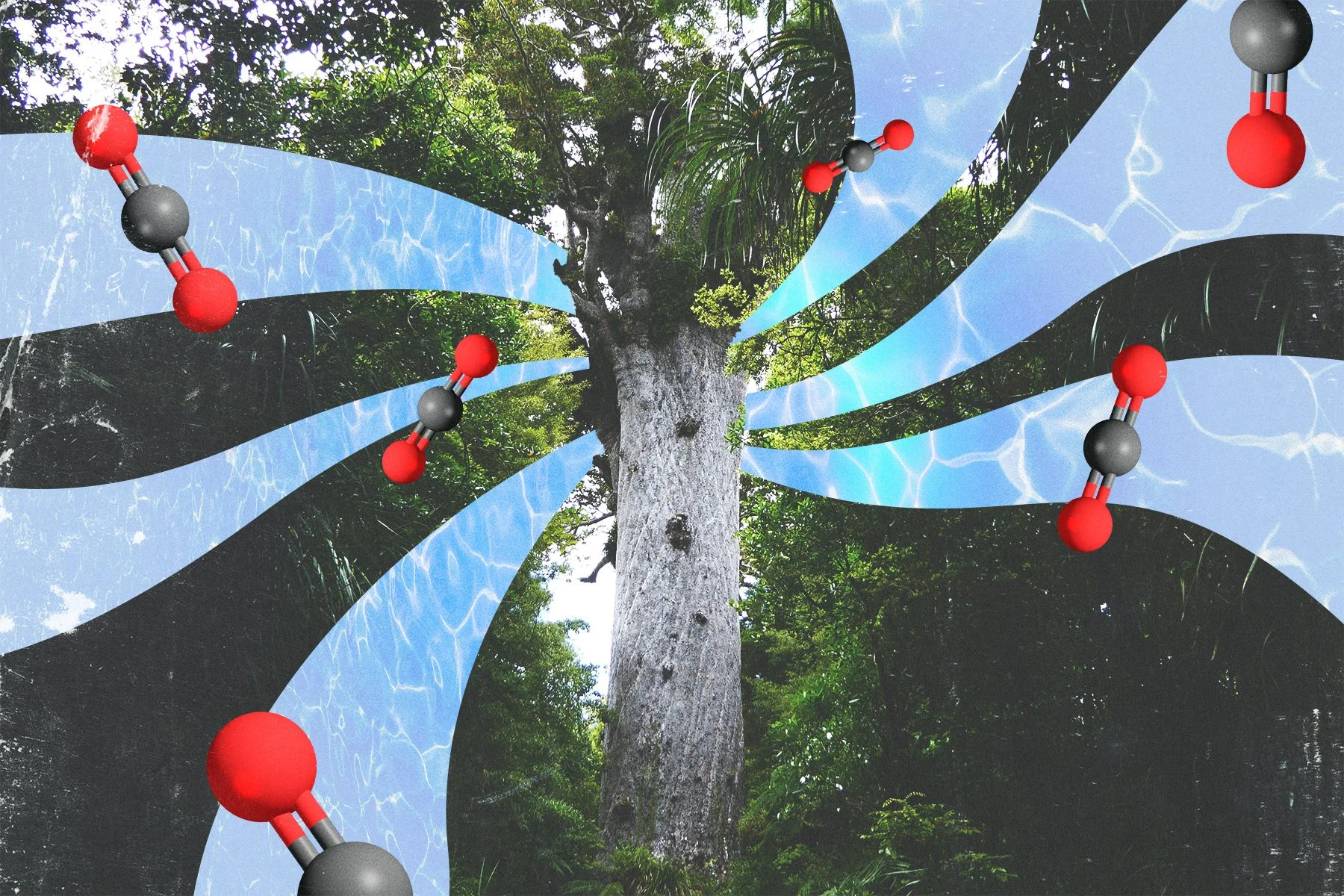
Maybe you think trees don’t do very much except block the view. But there’s a lot going on in there. Trees are factories. They’re laboratories. They’re air conditioners. They’re brokers and traders. They are, in short, living marvels.
If you spent your whole life standing in one place, you’d have to find other ways to get things done. Trees have to work with whatever comes their way, using biochemistry and physics to grow, reproduce, exchange goods and services and yes; communicate with other life forms and with each other.
When sunlight falls on their leaves, they capture its energy with a light-absorbing pigment called chlorophyll. That sunlight arrives as blue and red light waves, but because of the way our eyes are made, we only see the complimentary colour the leaves are reflecting, which is why forests look green to us.
At the same time, trees are releasing water vapour from pinholes, called stomata, on the underside of their leaves. The holes are tiny, but there are so many that the combined negative pressure—a capillary effect—created inside the tree sucks water from the ground, up the trunk and out to every last leaf. This natural pump is so powerful that Aotearoa’s biggest kauri, Tāne Mahuta, can process 40,000 litres of water a day, lifting it 51 metres into the air, in complete silence.
With the raw materials delivered, it now uses those light waves as fuel to power tiny catalysts in every leaf that pluck electrons off the water molecules (incidentally, we need vast industrial catalysers and boggling supplies of electricity to do the same thing when we make hydrogen).
While all this is going on, the tree has also been absorbing airborne carbon dioxide (CO₂) through its leaves. Now it adds the electrons to that captured CO₂ to make simple sugars. Those sugars are the building blocks for more complex, energy-rich molecules like glucose, and they power all life on Earth.
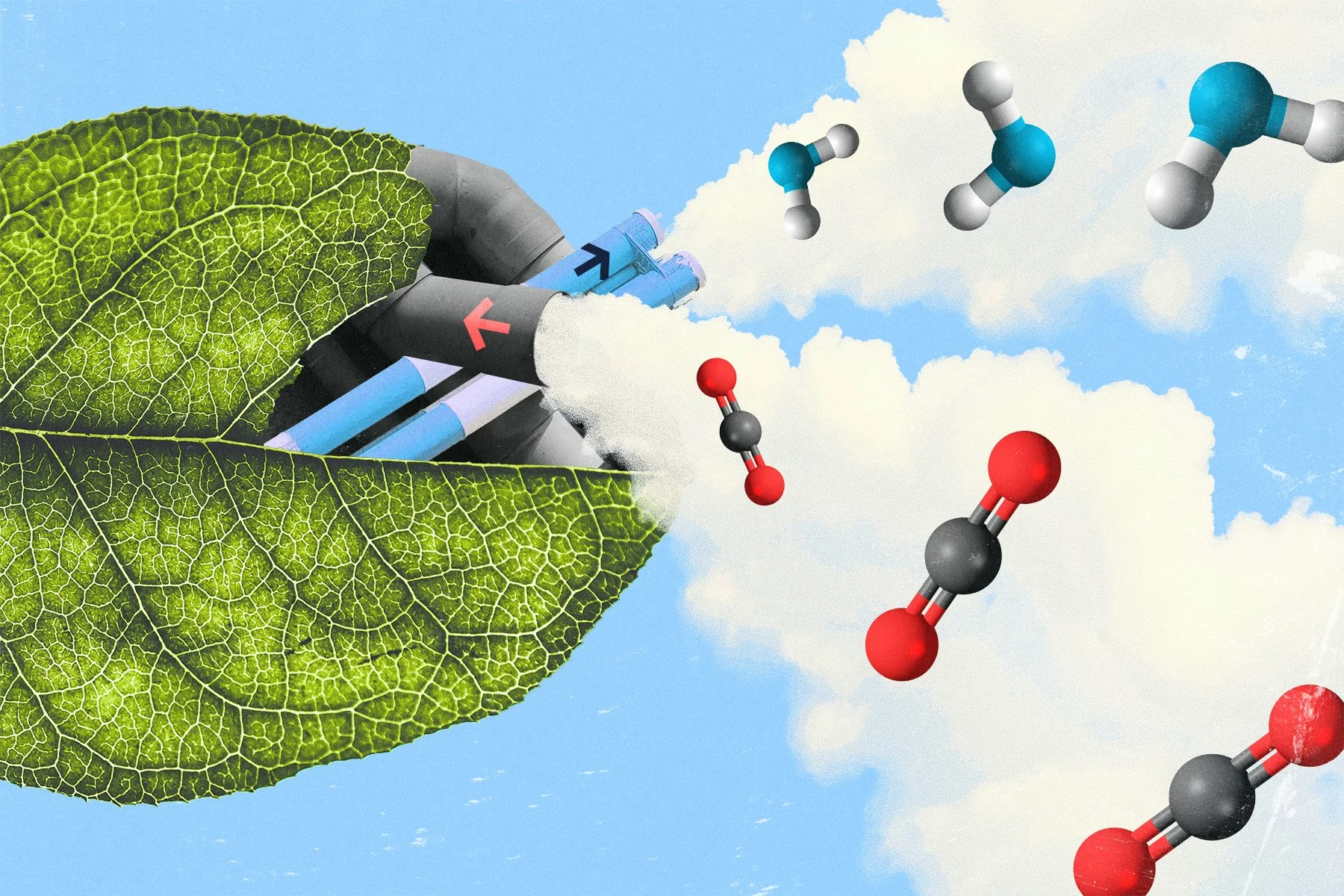
Plants use glucose for just about everything: linked together, glucose molecules make starch, a complex carbohydrate that the plant will store as fuel. Chains of glucose can also form tough cellulose, which gives a plant rigidity and helps it grow upright. By combining glucose with nitrates, plant cells can make amino acids, the building blocks of proteins for nutrition, growth and development. And those carbon atoms are now locked into all of it— trunks, branches, leaves, and roots. Climate scientists call this ‘carbon sequestration’. The tree has taken free-ranging CO₂ from the atmosphere and secured it in a vault that might stay shut for centuries.
In our next feature, we’ll look at just what that means for a planet getting hotter by the day.