
Without trees, your world would be a much hotter place already...
Nothing beats the cool shade of a tree on a hot summer’s day. Except perhaps the shade of lots of them: scientists have found that temperatures inside a forest can be as much as 8ºC cooler than those at the edge. That’s down to the shade they cast, and the misting effect of the water vapour they release.
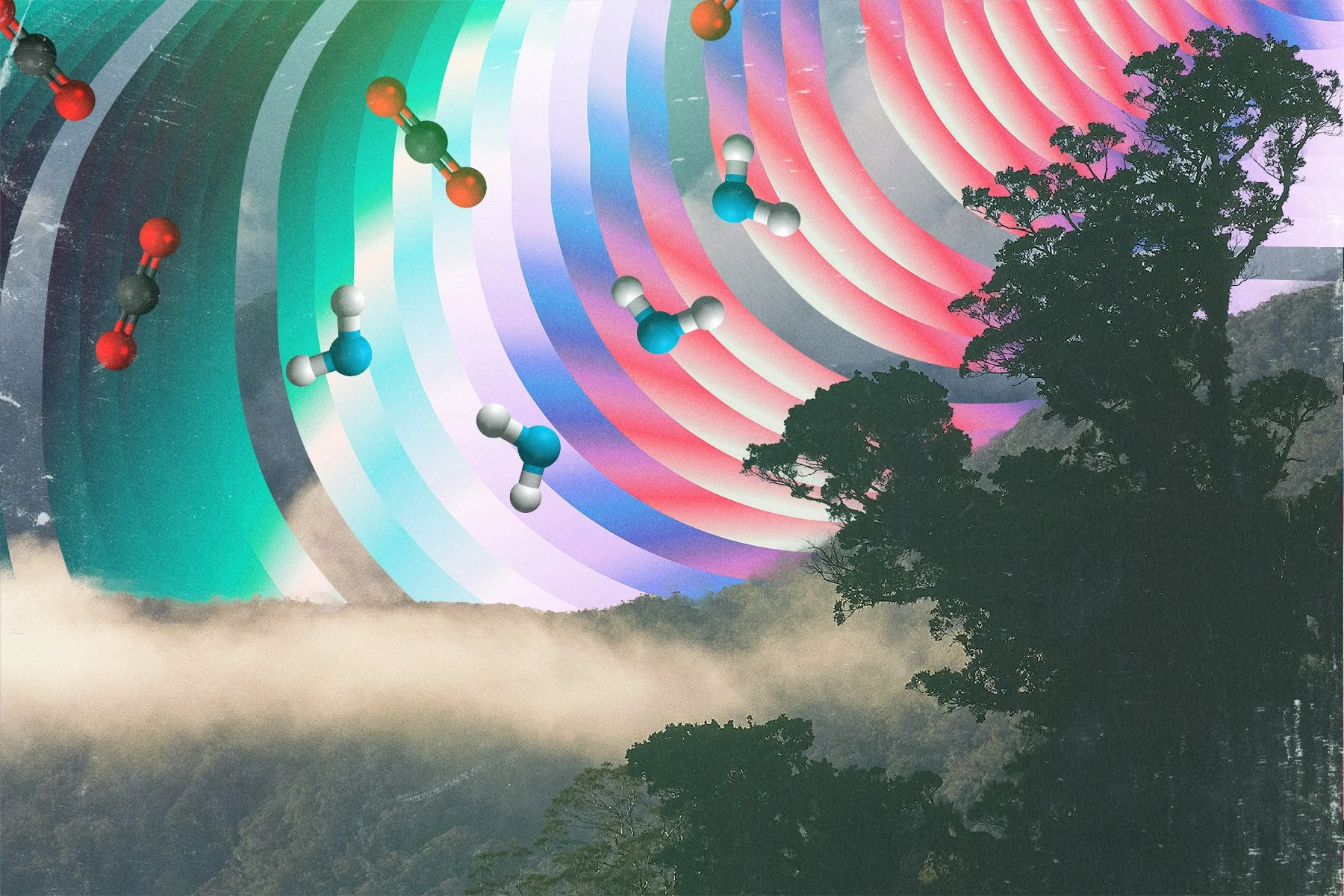
Then there’s the greenhouse gases that trees remove from the atmosphere. In the last feature, we saw that trees everywhere are capturing carbon dioxide (CO₂) and using it to grow.
Forests are our friends in need. Every gram of carbon they impound slows the rise of global temperatures and right now, across the world, they’re holding more than 860 gigatonnes of it (a gigatonne is a billion tonnes, or 200 million elephants). Every year, they suck up another 16 gigatonnes in the new growth they put on. Over the last decade alone, the planet’s vegetation (and soils) absorbed nearly a third of all the carbon emissions I caused when I drove my car.
Studies estimate that tropical forests alone are holding back more than 1ºC of atmospheric warming. Either side of those equatorial tropics, the earth has two temperate climatic zones; one above, and one below. The forests along those temperate belts – the Northwestern United States, Chile, Australia, and Aotearoa – nurture some of the largest and oldest trees in the world. That’s important, because old-growth trees hold more carbon than younger ones (even though younger trees can absorb carbon more quickly), and they can do it for centuries.
Then they die, and that carbon is gradually released back into the atmosphere, to be re-absorbed as new trees sprout in the light created. That’s part of a dynamic cycle in which carbon is ‘breathed in’ during photosynthesis. Most of that ‘breath’ is held – sequestered – while wisps of it are exhaled again as trees respire. That’s the mist that often hangs over a forest of a cool morning.
A tree can only take up carbon when it’s putting on growth, using it to build the sugars it needs to make cellulose and other building blocks for roots, branches and leaves. But what happens if that tree is in fact losing growth? There are a number of ways that can happen. Here in Aotearoa, it could be possums browsing its canopy, or deer, goats and pigs eating new shoots, leaves, bark or seedlings.
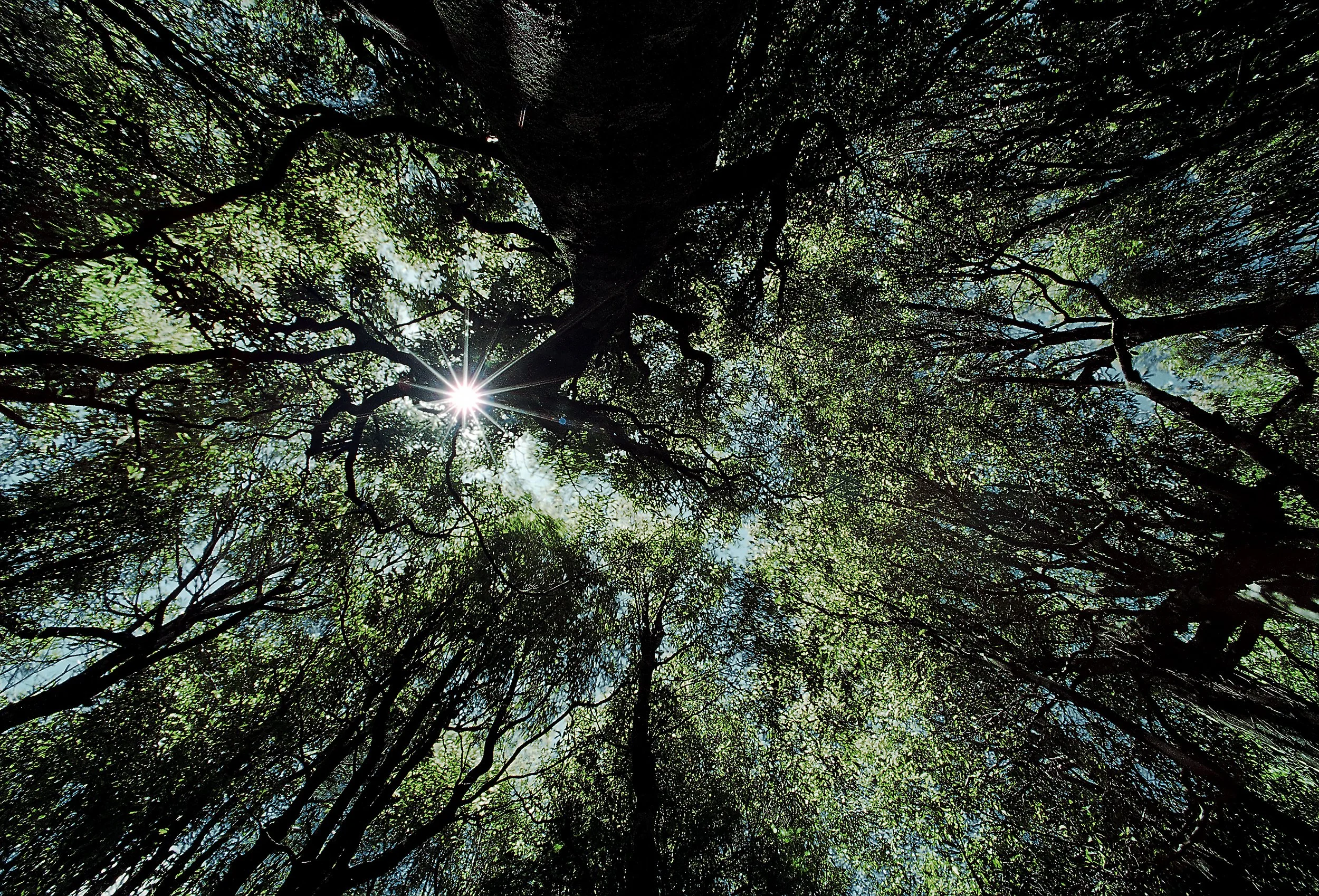
If that browsing is heavy enough, a tree can actually haemorrhage carbon back to the atmosphere. In carbon accounting terms, it has gone from being a carbon sink, to a carbon source. It is now making climate change worse. Where those browsers are uncontrolled, each hectare of West Coast/Te Tai Poutini forest is releasing an estimated tonne of carbon into the atmosphere every year.
That’s a missed opportunity.
Researchers at Zero Invasive Predators (ZIP) are right now investigating whether, by managing those browsing impacts, forests can be restored back to carbon sinks, which would be a win/win for native biodiversity and for the climate.
And for conservation work. If it can prove its wild animal control work removes carbon from the atmosphere, and if it can reliably measure how much, there could be a case for ZIP to be granted rights to trade that extra carbon on the international market.
Those revenues would then be used to finance further work, creating a virtuous funding circle that helps to address an historic shortfall for conservation in Aotearoa.
In our next feature, we’ll look at the ingenious ways ZIP researchers are building that case.