
Welcome to the first in a series of short features that will look at various aspects of the New Zealand Carbon Initiative. Here, we start squarely at the beginning: what is carbon, anyway? And why does it matter?
If you’ve ever cooked on a charcoal barbeque, that’s carbon giving your steaks that special flavour. It’s the graphite in your pencil (one of the softest known materials), and the jewel in your diamond wedding ring (the hardest). Starlight is made from it, and so, probably, is your mountain bike.
After oxygen, it’s the second most abundant element in your body, and you share it with every other life form on the planet—maybe even with some beyond it: carbon is the fourth most abundant element in the observable universe.
There are about 4,360 million, billion tonnes of it beneath your feet, and all of it was forged by nuclear fusion in the fiery hearts of stars.
Carbon is so ubiquitous because it readily forms molecular chains with practically anything: it’s the foundation of more than ten million unique, stable compounds—it’s the fundamental building block of organic life and material science.
When it forms strongly bonded chains with a hydrogen atom at each end, it can make coal, oil and natural gas. Chemists call them hydrocarbons; you and I know them as fossil fuels, because they started with the burial of organic plants and microbes, and have been interred beneath the earth and ocean for millions of years. While they were alive, those plants and microbes absorbed countless millions of tonnes of carbon from the atmosphere and the ocean, and as long as they remained buried, that carbon was locked up, or ‘sequestered’.
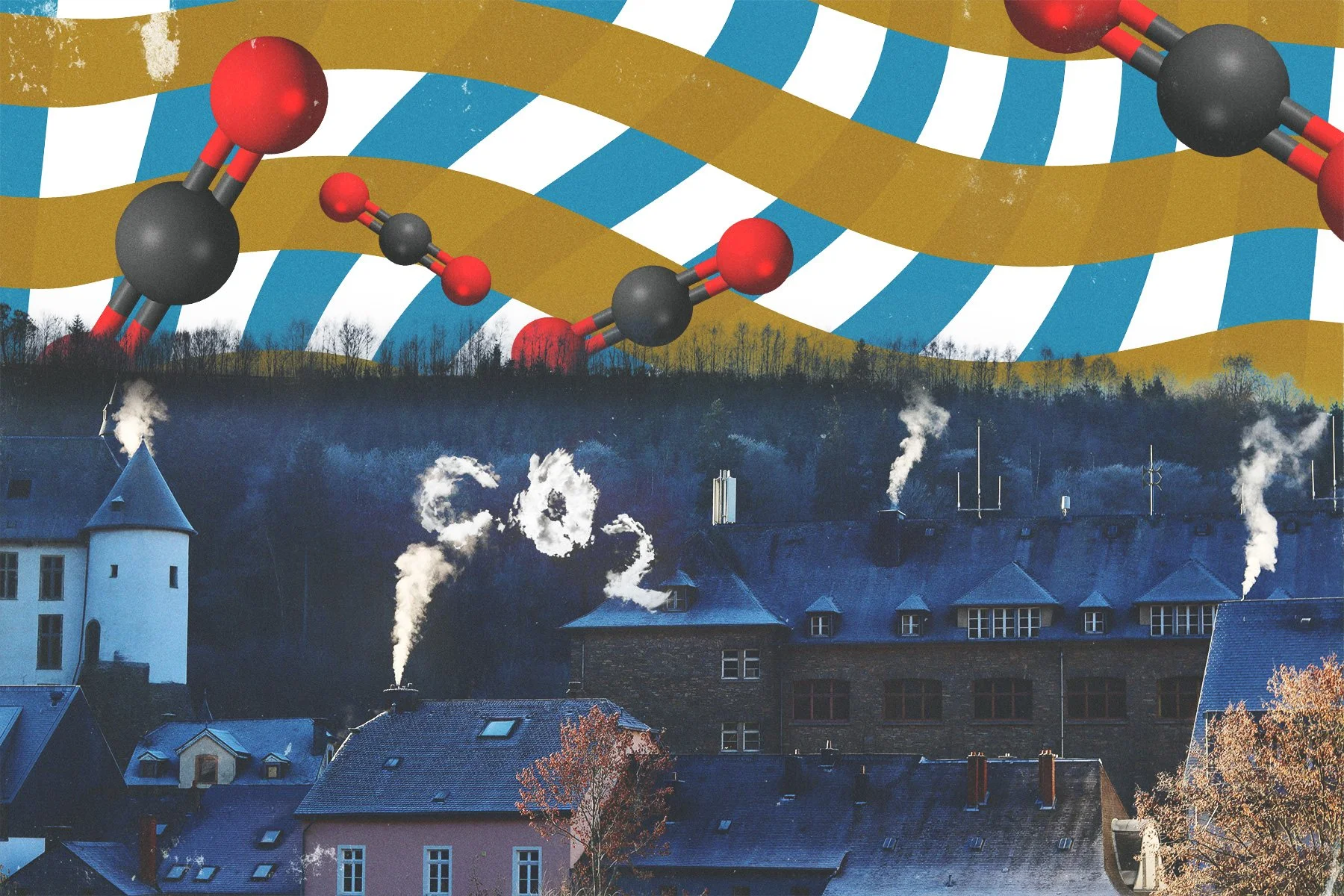
Then, in 1712, Thomas Newcomen figured out that if he burnt coal beneath a vessel of water, it would produce steam that could power machinery. He built the first working steam engine (although it was James Watt that patented a better one in 1750), kicking off the industrial revolution. Miners put Newcomen’s engine straight to work—extracting more coal. And when they burnt it, they broke the hydrocarbon chain, unlocking carbon that had been held captive for millennia. Every time I start my petrol car, I do the same thing, and the freed carbon—still eager for a bonding experience—quickly teams up with oxygen to form carbon dioxide (CO₂).
The CO₂ I just created might get dissolved again in the ocean. Or it might be absorbed by plants or soil, but statistically, it’s more likely to join other gases in the earth’s atmosphere. When Thomas Newcomen first fired up his steam engine, there were 2,100 billion tonnes of CO₂ in the atmosphere. When I was born in 1960, there were nearly 2,500. Today, there are more than 3,300 billion tonnes, and we add around 37 billion more each year.
And that’s a problem. Earth’s climate is driven by solar radiation from the sun, which passes through a ‘greenhouse layer’ of atmospheric gases—carbon dioxide, methane, ozone, nitrous oxide, chlorofluorocarbons and water vapor—on its way to the earth’s surface. That radiation bounces back off the surface as heat, but gets trapped by the greenhouse layer on its way back, where it gets scattered across the lower atmosphere, warming the planet.
The greenhouse layer keeps us all alive—if it weren’t there, say scientists, global temperatures would plummet by 33ºC. But what was once a cosy blanket is now a thick, swaddling winter duvet, thanks to all the extra emissions we’ve released into the atmosphere. CO₂ isn’t the only greenhouse gas, but according to the US National Oceanic and Atmospheric Administration, it’s responsible for about 80 per cent of the total heating influence behind climate change.
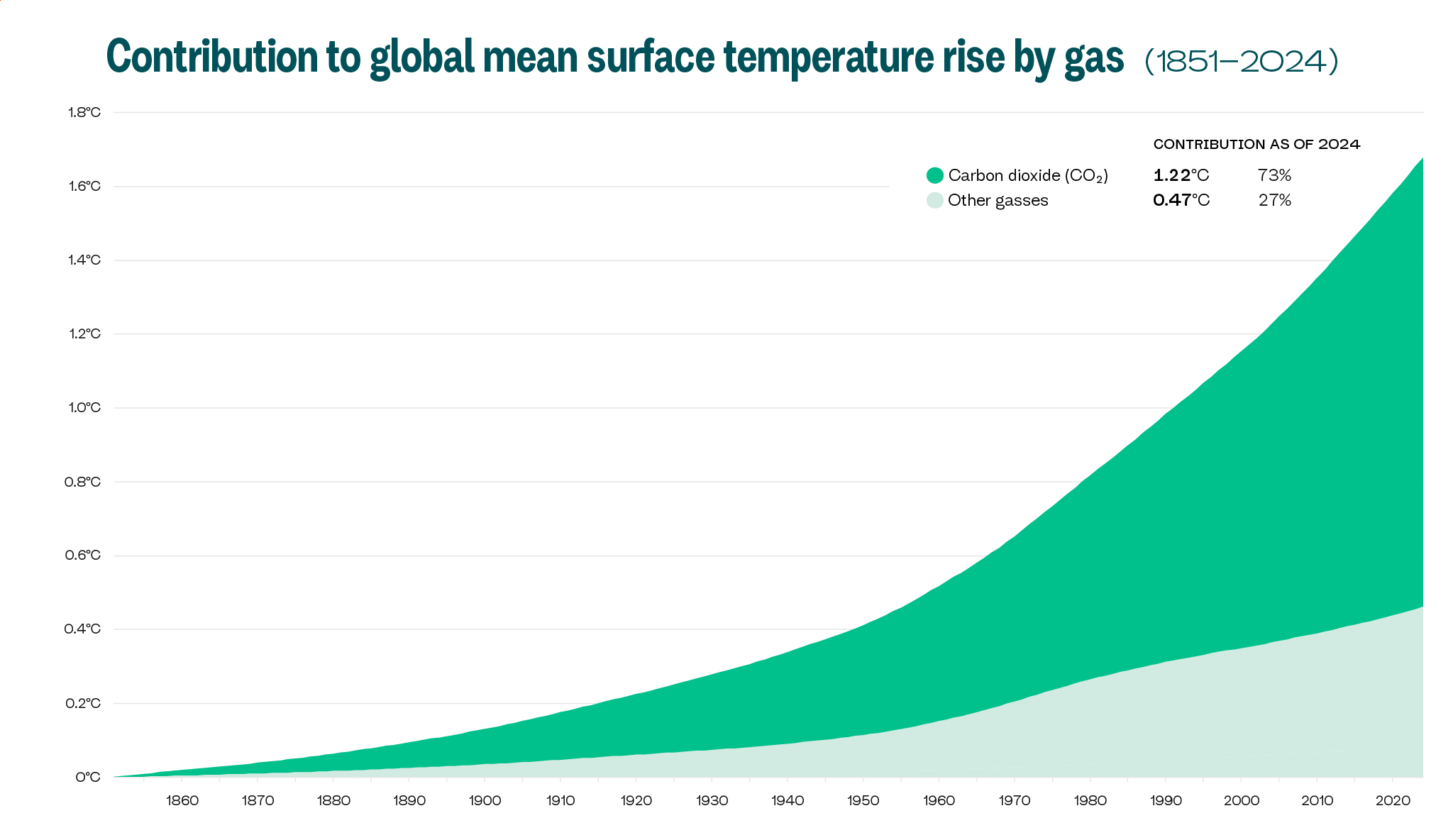
Without carbon, there’d be no life at all. But releasing too much of it into circulation has upset the earth’s energy cycle. We urgently need to return some of it to storage. The good news is that we have a number of ways to do that.
The most effective one is growing all around you...