
If you’ve ever hugged a tree, maybe you felt like you didn’t get much back. Trees are strong, silent types—but there’s a lot going on behind that bark.
Just like children, trees do most of their growing at night. By day, they’re busy gathering all the stuff they need to do that: sunlight, water, nutrients and carbon dioxide (CO₂). There are lots of different layers to a tree’s trunk, and each has a job to do. It was hard to make a connection through that bark because it’s the tree’s shield, protecting it against frosts, pests, browsers and fire. During droughts, it’s bark that keeps the moisture in.
Behind that shield lies the phloem. It’s like a sushi train, delivering sugars and nutrients made by the tree’s leaves to its branches, trunk, and roots. When phloem cells die, they become bark. Behind the phloem is the cambium layer, a very thin veneer of living, growing cells, labouring to make new wood inside the tree. It’s their team effort that makes a tree wider and taller each year.
Those cells surround the xylem—highly specialised vascular tissue packed with hundreds of metres of very narrow tubes. They’re full of mineral-laden water, captured by tree’s roots. Think of a mature kahikatea; it might be 60 metres tall, in which case its xylem is maybe holding 200 litres of water. A litre of water weighs exactly one kilogram, so imagine the sort of power a pump would need to lift those hundreds of kilograms 60 metres into the air. Humans can only do that with huge, rowdy firefighting appliances.
Trees do it in complete silence, using their own leaves (but by using sensitive microphones, researchers can hear this happening). Stomata are tiny pores on the surface of every leaf. When they open, water evaporates from them. That creates negative pressure—a suction force—in the xylem, which draws more water up by capillary action. It’s called transpiration, and it’s literally effortless—the tree uses no energy at all. But it doesn’t actually need all that water—it’s more interested in the minerals and nutrients it contains—so when the water gets to the top, it’s released as water vapour, and the process goes on.
We think of tree trunks as unmoving, but the commodity trading going on in a xylem is so vigorous that it makes the trunk expand and contract—a bit like your chest rising and falling as your lungs work. If we had a way of measuring those tiny tree ‘breaths’, it would reveal much about the tree’s life; how it responds to fluctuations in water or nutrient deficit, heatwaves, insect attack, disease, frost or even fire.

ZIP carbon rangers installing a dendrometer as part of defoliation trials.
Turns out we do. A dendrometer is a highly sensitive meter attached to the trunk. It can detect minuscule changes in the diameter of that trunk as the tree responds to all those influences. Better still, it can record those changes over 24 hours, a week, or a whole season. Dendrometers show us that stems shrink during the day as stomata open and the tree transpires. At night, the tree stops ‘breathing’ and the stem swells again as the trunk refills with water.
At regular intervals, ZIP-developed dendrometers detect changes in the tree’s girth as tiny as a few microns—the width of a human hair—then send their data remotely over Predator Free South Westland’s ‘terrestrial node and gateway’ system, straight to researchers’ laptops. Dendrometers have been available from overseas for years, says ZIP science and technical advisor Marissa Le Lec, but they weren’t built to stand up to West Coast rain and vandalous kea.

So ZIP built its own. ‘We weatherproofed ours, using O-rings to seal out water,’ she says. And we enclosed all the sensitive components in a carbon fibre housing, because these things get a lot of attention, not just from kea, but also possums, rats and mice. The ZIP dendrometer is much more likely to survive in the New Zealand environment.’
Even with those improvements, says Le Lec, ‘Ours is still five times cheaper than those from overseas.’
But ZIP’s business is pest elimination—why is it interested in the tiny movements of trees?
Dendrometers give us information in two temporal ‘dimensions’: apart from the oscillating scale of trunk movement over 24 hours—the tree’s daily 'metabolism’—they can also describe a longer-term trend, which is the tree’s rate of growth, and that’s the bit ZIP is keen to know better.

A ZIP carbon ranger checking that newly installed dendrometers are communicating with the network.
There’s good evidence that trees suffering heavy browsing—by possums or ungulates, such as goats and deer—spend so much of their energy replacing lost leaves that they have nothing left to grow with. ZIP is testing the hypothesis that browsing hampers a tree’s ability to make wood in that cambium layer we talked about earlier.
If that’s correct, then it has big implications for climate change. CO₂ is responsible for about 80 percent of the total heating effect of human-produced greenhouse gases. But trees are doing their best to save us from ourselves: they absorb airborne CO₂ to manufacture simple sugars. They use those sugars to build more complex, energy-rich molecules like glucose, which in turn is used to make carbohydrates for fuel, and tough cellulose. Those carbon atoms are now locked into the tree’s trunk, branches, leaves, and roots. Climate scientists call this ‘carbon sequestration’. The tree has taken free-ranging CO₂ from the atmosphere and secured it in a vault that might stay shut for centuries.
That simple molecular chain makes living wood the planet’s biggest carbon sink. Globally, forests absorb nearly 16 billion tonnes of CO₂ per year—15 per cent of all our CO₂ emissions—every year. Right now, they’re holding 861 gigatonnes of carbon in safe keeping.
So while dendrometers are measuring tiny changes, they’re helping us understand much bigger ones. If the browsing of our native forests means they can’t store as much carbon (or worse, start releasing it), then it follows that ZIP’s predator elimination work would help them store more. The idea, then, is that ZIP could trade that extra carbon on international voluntary markets, raising revenue that could then lock in those gains through project maintenance.
By telling us what’s going on inside trees, ZIP dendrometers are central to that virtuous cycle, in which conservation funds more conservation.
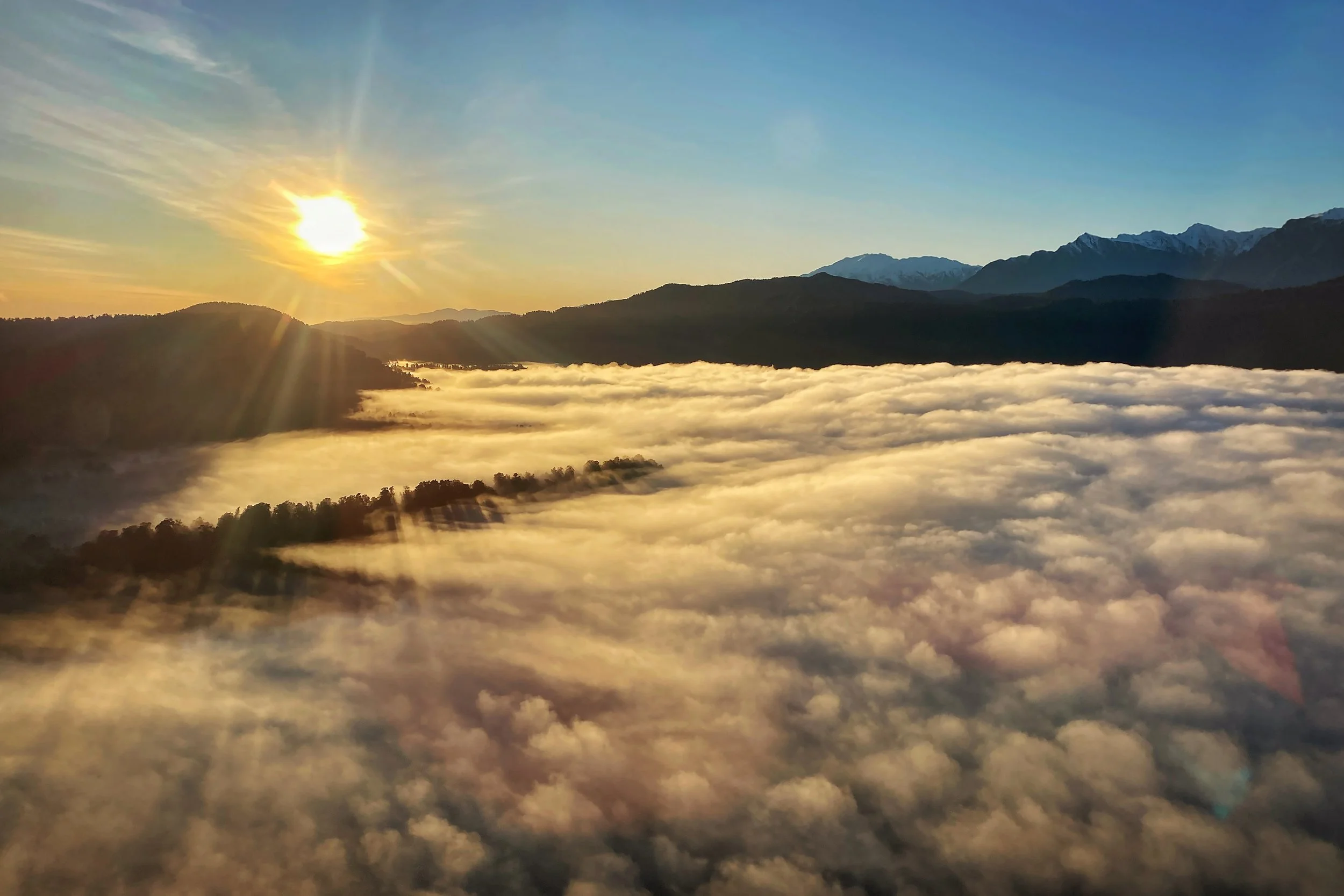
Cover image: Early morning over Lake Mapourika. After any decent rain, you’ll see mist rising from a forest. That’s the trees transpiring all that surplus water. But in times of drought, a tree can close its stomata instead, and lock vital water inside its xylem to tide it over. (Chad Cottle/ZIP)